
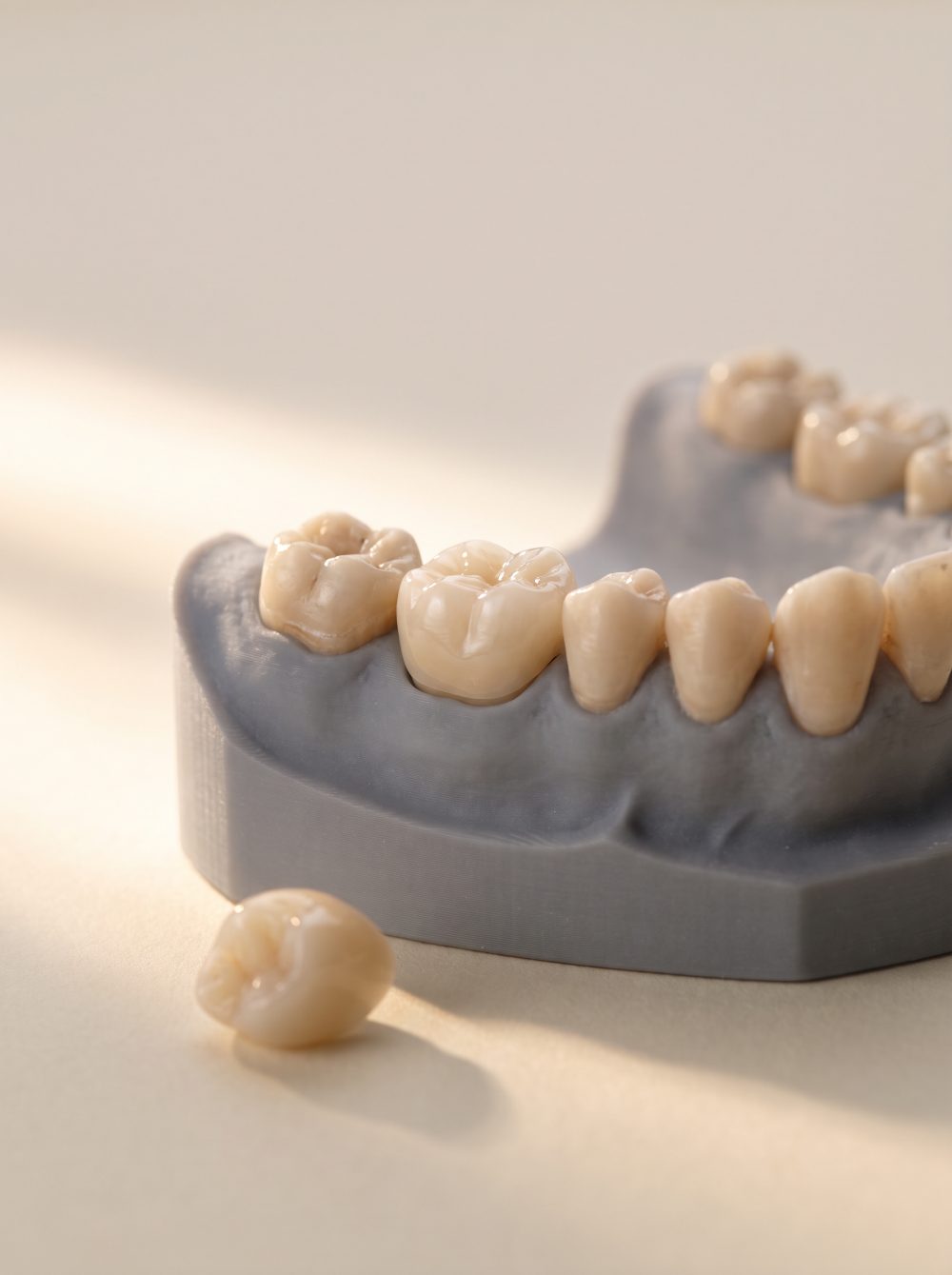
When a crown helps
Why you might need a crown
- A cracked or broken tooth
- A tooth with a large or failing filling
- A back tooth after root canal treatment
- A badly worn tooth
- A misshapen or discoloured tooth
- A tooth replaced with a dental implant
Materials
Choosing the
right material
Your treatment
How a crown is made
Risks and limitations
What to consider
- Sensitivity after the tooth is prepared, which usually settles
- The tooth underneath can still decay at the edge of the crown if it isn’t cleaned well
- Occasionally the nerve becomes inflamed and root canal treatment is needed
- Crowns can chip or come loose over time
- Preparing a tooth for a crown removes some tooth structure, which can’t be undone
Any surgical or invasive procedure carries risks. We’ll talk through the ones that apply to you before anything goes ahead, and you’re always welcome to get a second opinion.
Costs
Questions
Your questions, answered
Still wondering about something? Give us a call on 09 570 2823 or email reception@classicsdental.com, and we’ll get back to you.
How long does a crown last?
Does getting a crown hurt?
The tooth is numbed first, so it feels much like having a filling. It may feel a little tender for a few days afterwards.
Will it look natural?
Yes. We match the shade to your neighbouring teeth, and modern tooth-coloured materials blend in well.
Could I have a filling instead?
Sometimes. If enough healthy tooth remains, a filling may be enough. We’ll explain the pros and cons of each in your plan.
You might also be interested in
Ready when you are
We'd love to see you